
Ten years of “Insurance for” and why it matters to people who rebuild

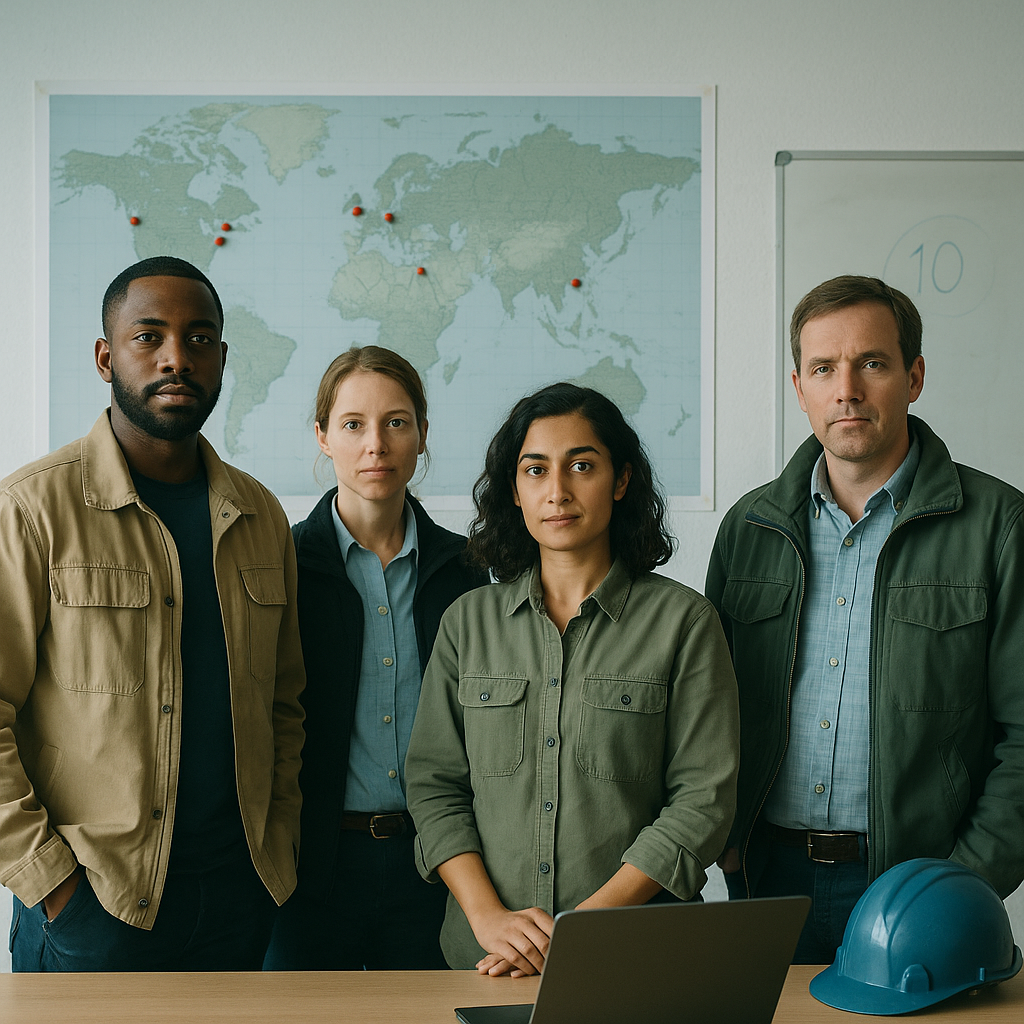
TInsurance for support teams who arrive after the cameras leave, rebuilding power, water, communications and transport
Ten years ago we launched “Insurance for” to solve a specific problem. Journalists and media teams were travelling into dangerous places with little or no realistic cover. Mainstream insurance excluded war, terrorism and civil unrest. The people telling the story were often carrying the risk alone.
Since then, the brand has grown into something wider. Alongside media and NGOs we now support a broad group of people whose work starts when the cameras leave. Engineers, contractors and technical teams who go in after conflict or natural disaster to restore power, water, communications and transport. The people who help communities move from shock towards something like normal life again.
This is the world that insuranceforanyone.com was built for. Our anniversary is a moment to look at what that means for you if your job is to go where the damage is and make things work again.
From frontline reporting to frontline repair
Our roots are in the media sector. That experience shaped how we work.
We learnt how to support people who travel at short notice into fragile or hostile environments. We learnt how to match cover to complex itineraries that change overnight. We learnt how to talk plainly about risk with people who understand danger but do not want drama.
Over time we saw another group facing similar problems. Contractors and specialists who arrive once the immediate crisis passes, or in the quiet gaps between headlines.
- Power and utility engineers working to restore grids and pipelines
- Telecoms and IT teams reconnecting communities and key services
- Construction crews repairing bridges, roads and public buildings
- Surveyors, safety specialists and trainers assessing damage and risk
- Technical advisers and project managers coordinating multi country work
They were travelling into the same cities and rural areas as journalists and NGOs, often with the same level of personal risk. Yet standard corporate travel insurance still treated this as ordinary business trips.
“We are the ones who go back in when the headlines move on. We needed cover that understood that reality. ‘Insurance for’ were the first to talk about our projects in a way that made sense.”
Operations director, European infrastructure contractor
Why standard insurance struggles with this kind of work
If you restore critical infrastructure after conflict or disaster, you know how different your work is from normal site visits.
Typical challenges include:
- Security conditions that can shift quickly as political situations evolve
- Damaged or unreliable local health care and evacuation options
- Movement restrictions, curfews and checkpoints that affect routes
- Mixed teams made up of international staff, local hires and sub contractors
- Projects that start as short visits and become long term presences
Standard policies are often not written with this in mind. They may have broad exclusions for war, terrorism, civil unrest or named countries. They may not recognise roles that involve field inspections, remote sites or work near critical infrastructure.
The result is a real gap.
- Individuals believe they are insured when key risks are excluded
- Project leaders carry heavy responsibility with limited clarity
- Boards and clients assume duty of care is covered when it is not
insuranceforanyone.com exists to give a clear, credible alternative for people whose work does not fit neat travel categories.
Who we built insuranceforanyone.com for
We use the word “anyone” carefully. This is not about everybody who travels. It is about people whose work takes them into difficult or hostile environments where the risk profile is clearly higher than a regular business trip.
Typical users include:
- Power, water and energy sector engineers working on damaged or at risk infrastructure
- Telecoms, satellite and IT teams reconnecting networks in unstable settings
- Construction and civil engineering crews working near recent conflict or disaster zones
- Surveyors, structural engineers and risk assessors inspecting damaged buildings or roads
- Specialist trainers delivering safety, medical or technical courses in high risk regions
- Independent consultants and small teams contracted to large organisations or governments
Some are long term contractors who spend months at a time in one country. Others are part of rotating teams that visit several sites across a region. Many work in partnership with NGOs, international agencies, utilities or local authorities.
“Our people are not adrenaline seekers. They are experts who want to do a job and come home. Having dedicated cover in place changes the tone of the conversation with them and with their families.”
Head of HSE, global engineering firm
Real world scenarios where specialist cover matters
Every project is different, but certain patterns keep appearing. These examples are based on the kind of work we see regularly.
1. Rebuilding the power grid after conflict
A utilities contractor is hired to help stabilise and rebuild parts of a national grid in a country that has been through recent conflict. Teams need to visit substations, transmission lines and control centres that are sometimes in contested or sensitive areas.
With specialist cover in place, the company can:
- Confirm that the mix of locations falls within defined risk zones
- Include international staff, key local hires and critical sub contractors
- Align medical and accident cover with the security planning already in place
Project managers and HSE teams can then plan work with a clear understanding of how their people are protected.
2. Restoring communications after a natural disaster
A telecoms company sends task forces to restore mobile and internet coverage after a major storm and flooding. Infrastructure is damaged, roads are unreliable and local health services are under pressure.
Teams may need to travel by helicopter or boat, stay in temporary accommodation and improvise work sites. Standard corporate travel insurance is not built for this.
Using specialist cover, the company can match benefits to the actual risk. That includes realistic medical evacuation options, accident benefits and clarity about what happens if a situation deteriorates while teams are on the ground.
3. Repairing critical transport links
A construction consortium is contracted to repair a key bridge and surrounding roads in an area that has seen recent unrest. The project is time sensitive, politically visible and technically complex.
Site staff, surveyors, project managers and logistics teams all need to be present at different times. Local labour is essential but may not have had access to similar cover before.
Our framework allows all relevant roles to be considered, from senior engineers to local supervisors, in a single approach rather than a patchwork of separate arrangements.
4. Small specialist teams on short notice deployments
Many of our clients are small consultancies or teams of independent specialists. They are often called in when a larger organisation needs a specific problem solved quickly.
This might be structural assessment, environmental testing, safety training or technical advisory work. Deployments can be agreed in days, with travel to locations that mainstream insurers categorise as high risk.
With insuranceforanyone.com, these teams can obtain clear, project specific cover that matches where they are going and what they are doing, without long delays or generic refusals.
Focusing on teams, not just individuals
In high risk environments, people rarely work alone. The real unit is the team. That team may blend employees, contractors and local partners.
We design cover with that reality in mind.
- Group structures that can include core staff, key contractors and crucial local roles
- Clear categories of cover that match different responsibilities and exposure levels
- Processes that allow you to add or remove people as projects evolve
This approach supports both practical safety and a stronger culture of shared responsibility. Everyone knows who is covered, for what and under which programme.
“Previously only our permanent staff were properly covered. With this structure we can include the local engineers and supervisors who are on the front line every day. It has changed how we talk about risk as a team.”
Project manager, post disaster reconstruction programme
What has stayed constant across the “Insurance for” family
As we have grown beyond media, a few principles have remained the same across all our brands.
People first
We start with the people doing the work, not with the policy wording. Their role, route and environment come first. We then match cover to that picture.
Plain language
Insurance is important and often technical, but it should still be understandable. We avoid jargon where possible and explain key terms in straightforward English.
Practical flexibility
High risk work is rarely neat. Projects move. Security conditions shift. Travel plans change at the last minute. Our products are built to handle movement where the risk can still be managed responsibly.
Direct human contact
You speak to people who understand conflict affected and disaster affected environments. Not a generic call centre. That saves time and reduces stress, especially when decisions are urgent.
Working with HSE, HR and project leadership
Specialist insurance only helps if it fits into the way you already manage risk and people. We aim to work alongside your existing structures, not cut across them.
- HSE teams use our input when planning site work, toolbox talks and movement rules
- HR and people teams align cover with contracts, briefings and staff welfare
- Project managers gain clear lines of sight on who is covered for which project
- Clients, boards and lenders gain confidence that duty of care is being taken seriously
We can support reviews of current arrangements, identify where standard travel insurance is not enough and help you build a clear plan for staff, contractors and key partners.
Looking ahead: a tougher environment for people who rebuild
The next decade is unlikely to be calmer than the last. Conflicts are becoming more complex. Climate related disasters are more frequent and more intense. Infrastructure is under strain in many regions.
That means more work for the people who repair, restore and rebuild. Power lines will need to be lifted back onto towers. Roads and bridges will need to be made safe. Communications networks will need to be reconnected.
We cannot remove the risks that come with that work. What we can do is help ensure they are understood, managed and backed by clear, credible protection.
For us, that means continuing to refine our cover, strengthen our partnerships and listen to the contractors, engineers and specialists we insure. The goal is simple. When you decide a project is worth the risk, insurance should not be the reason it stalls.
What you can do next
If you or your organisation already work with us, thank you for trusting us with your teams. If you are new to “Insurance for” and you send people into difficult environments to repair and restore, this is a good moment to take stock.
- Review who is really covered - look beyond headline policies and check how they treat conflict, unrest and damaged infrastructure
- Map your project profiles - list the countries, types of work and team structures you use in higher risk locations
- Talk to us about your work - share examples of the projects you take on so we can outline practical options for cover
You do not have to work this out alone. If your teams are the ones who go in after conflict or disaster to help communities rebuild, insuranceforanyone.com is here to support you. Get in touch with us to discuss your people, your projects and the places where you work.
Other articles
view all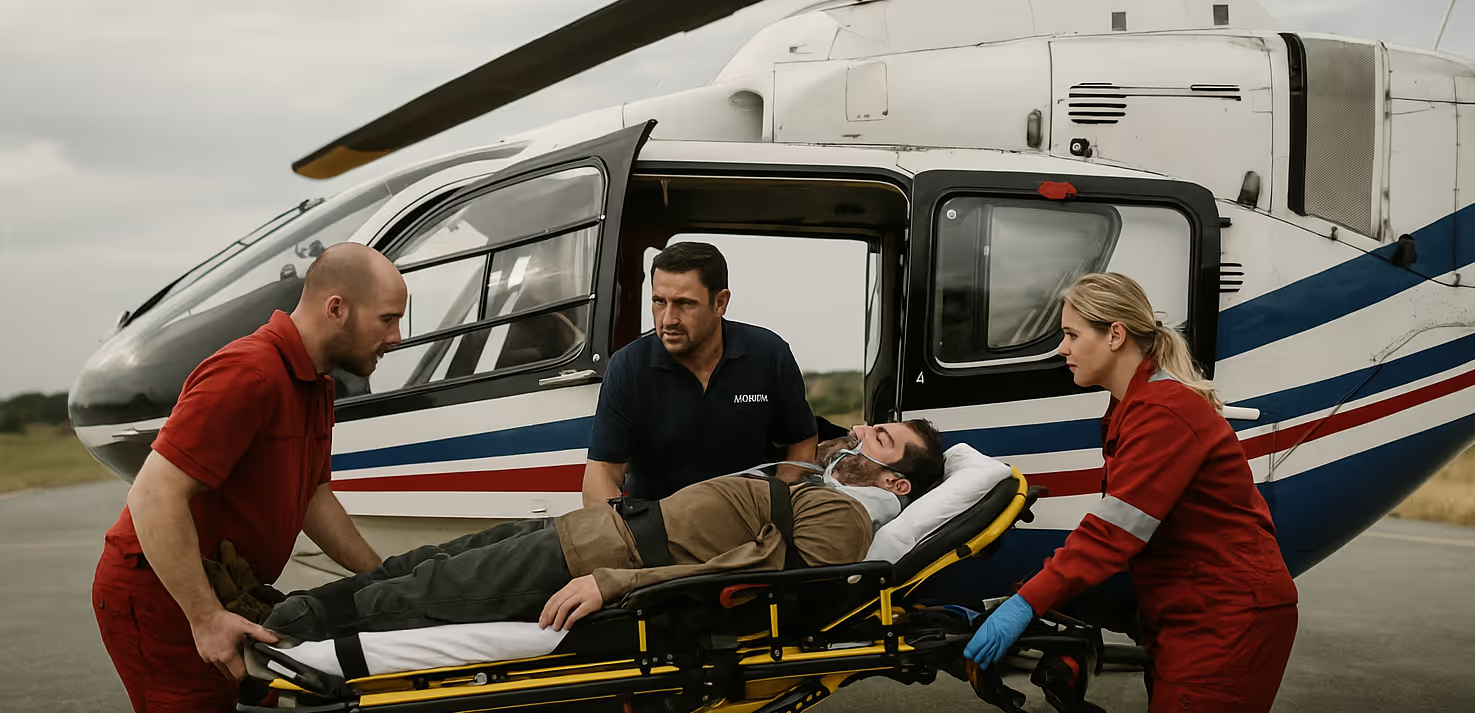
ESSENTIAL COVER FOR EVERYBODY
Get StartedWHO ARE WE?
We are administrators of specialist personal accident insurance schemes for individuals, organisations and locally employed people worldwide.
COMPANY INFORMATION
Insurance for Ltd are administrators of specialist insurance schemes insured by Atlas Life Insurance (PCC) Ltd which is licensed and regulated by the Seychelles Financial Services Authority. This scheme is 100% reinsured by Lloyds of London.
WHO DO WE WORK WITH?
ACOS Alliance
Frontline Freelance Register
PayDesk
The International Press Institute
The Inter American Press Association
The Foreign Correspondent Association of East Africa and others.
SIGN UP TO LATEST NEWS, rates AND OFFERS
To receive occasional information about rates and media safety sign up for our newsletter. You can unsubscribe at any time.
CONTACT US
⚠ Make An Emergency Claim ⚠
Email: info@insuranceforgroup.com
Registered office: Insurance For Ltd. Rsm Fifth Floor, Central Square, 29 Wellington Street, Leeds, England, LS1 4DL, UK
Company Registration No: 09879856
Privacy/Cookies Policy | Terms and Conditions Policy